×
Please verify
Each day we overwhelm your brains with the content you've come to love from the Louder with Crowder Dot Com website.
But Facebook is...you know, Facebook. Their algorithm hides our ranting and raving as best it can. The best way to stick it to Zuckerface?
Sign up for the LWC News Blast! Get your favorite right-wing commentary delivered directly to your inbox!
Show
September 14, 2026
Watch: What That University of Texas Picture Actually Says About Immigration, & 'Racism'
Watch Louder with Crowder every weekday at 11:00 AM Eastern, only on Rumble Premium!
Check out our Election 2026 Dashboard to keep track ot the upcoming midterms!
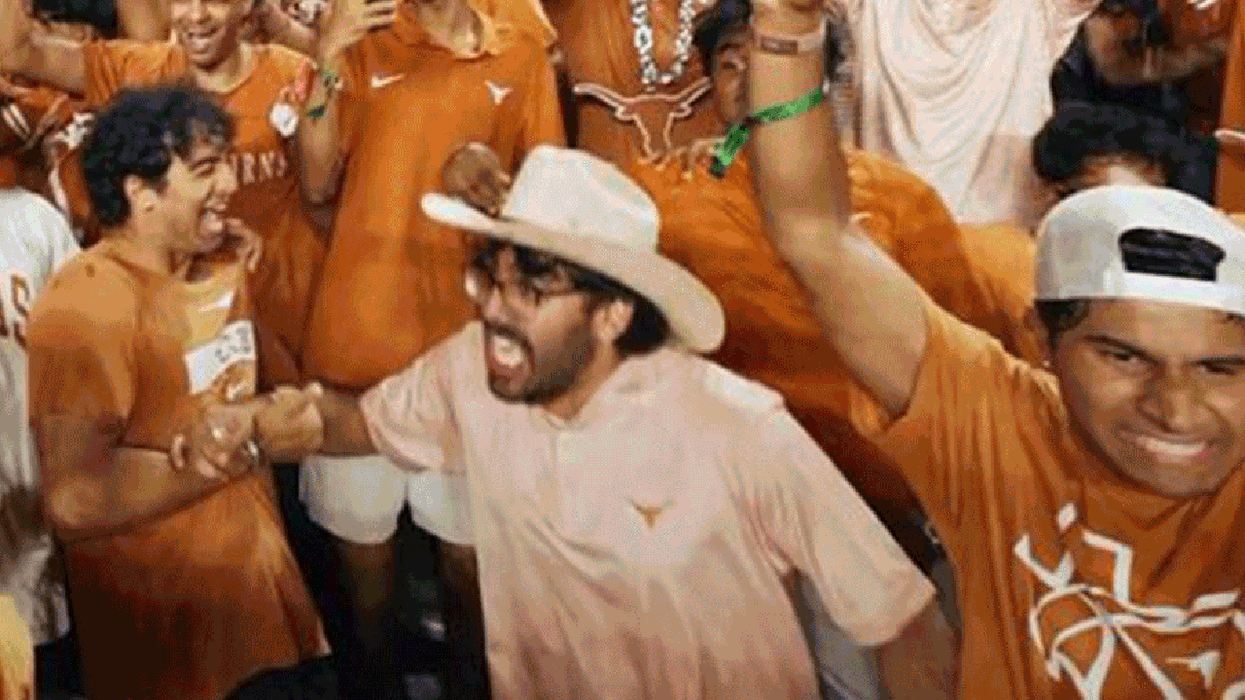
A shot taken of the Texas/Ohio State game triggered a discussion about the demographic changes in America, as the majority of people in that video appeared to be of Indian descent. Is assimilation coming? Today’s show breaks it down.
“Neither side has addressed this correctly because we don't know the full story,” Crowder said. “Let’s be clear. It is just an image. It may be just a section. It may not be the entire stadium, and it does not mean the entire makeup of UT is Indian immigrants or second-generation, but I also understand the reaction to it. I don't think those who claim to be Conservatives, accusing Conservative voters who are concerned of being racist, that is not helpful.”
According to The Texas Tribune:
On Sunday, Bo French, the Republican candidate for Texas Railroad Commissioner, posted a series of xenophobic social media posts taking aim at students of color celebrating at the University of Texas football game, and prompting a wave of intra-party rebuke just weeks before the November election.
"I heard UT graduation this year looked like this," French said in another post with a photo of the students. "I didn't believe it. The problem is now obviously far worse than anyone imagined."
“These are not individually bad people. They may be very American and love the United States and may even vote the right way. But the reason for the reaction is because of demographic changes that people have to live with,” Crowder said. “It is okay for people to say my school and neighborhood does not look anything like it used to.”
There are many reasons as to why people are concerned. For example, in Frisco, the Asian population, which includes Indians, rose from 2% to 30% since 2000. In Coppell, it went from 18% in 2006 to 57% in 2026.
“Imagine you have been in Coppell for a long time, and now you are an extreme minority within a span of a decade, because of a huge influx of H-1Bs. And most of them do not assimilate. Not all, but most,” Crowder said.
When it comes to UT Austin, from 2017, it went from 49% White to 29%. For Asians, it went from 19% to 26%.
“There have always been a lot of Asians on campus; there have not been this statistically significant number of Indian immigrants,” Crowder said. “It is an entirely different place to learn.”
Crowder added, “If everyone is tribal except for the American people, guess what you lose? You lose your tribe, and you lose your country. Our tribe has not been primarily based on ethnicity. Unlike India, where you cannot simply go and purchase homes or benefit from the welfare system or put your roots down, in the United States it has been based on ideas, but also a little bit of ethnicity. But if you say there is no difference and that as long as they assimilate at a football game, then you end up with the people who are tribal just filling out the White people in the companies, and now it is all entirely Indian.”
Is Frisco better off going from 2% to 30% largely Indian?
“Who is that better for, outside of the Indian immigrants who have replaced people that were there before? Who is that good for? How is that better for the United States?” Crowder said.
Latest